Project Background

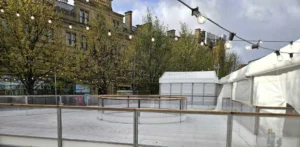
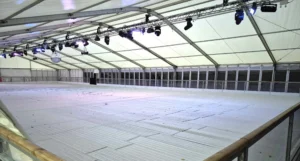
Every winter, organisers build an ice rink in the grounds of Manchester Cathedral, and it has been one of the city’s seasonal attractions for a number of years. The rink runs from early November through to the first week of January. It needs a reliable source of cooling throughout that period to build the ice and keep it in good condition.

The rink’s project team needed 400kW of cooling capacity to build and hold the ice on the main rink and on a smaller rink next to it. They also wanted backup capacity in place so the rink could keep operating if a chiller failed. Members of our team had supported the rink in previous seasons, so the project manager came to Rapid Energy for a temporary cooling solution.

250kW Chiller Hire

Equipment Supplied

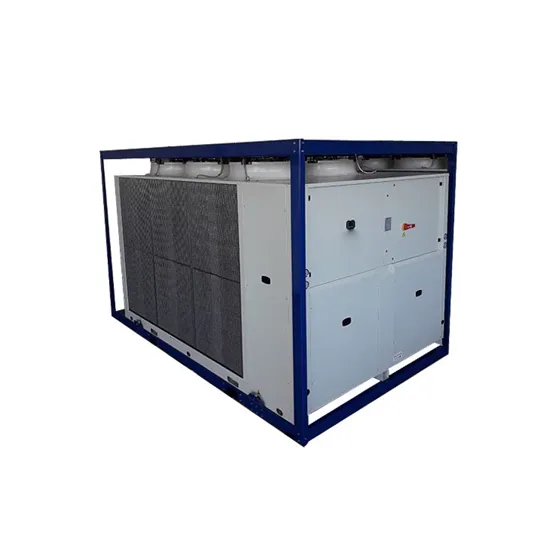
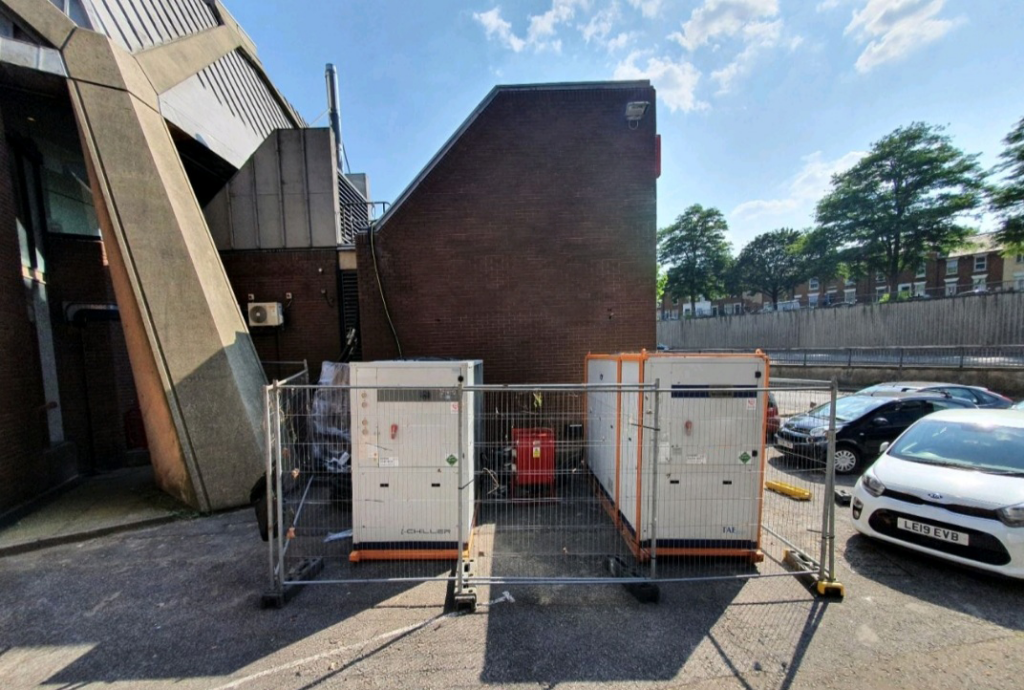
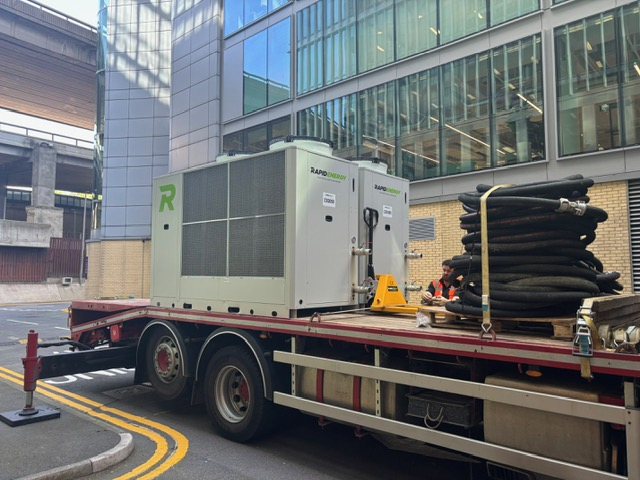
  • 3 x 200kW chillers (2 duty, 1 standby)
  • 2 x 800 litre-per-minute pumps
  • 1 x 2,000-litre buffer tank
  • 1 x 3000L Fuel Tank
  • 1 x 200kVA Generator

Challenges

A fixed build schedule: Installing cooling for an ice rink means working around the other contractors on site. Our chillers, pumps and buffer tank had to go in at the start of the build, while only a partial scaffold structure was in place.

The team couldn’t make the final connections until they had finished and pressure tested the framework, marquee and rink mat.

Restricted access: The site sits in a council-controlled area, which limited our delivery times. Our team had to drop off equipment from 5am.

Shared power supply: Each 200kW chiller needs a 250-amp breaker, and other trades on site also wanted power from the in-house supply. We had to allocate the available capacity carefully.

Flow and pressure limits: Ice rink mats can typically handle about 1.5 bar. The system had to deliver maximum flow across both mats while keeping pressure well below that limit.

Leak prevention: The system runs on 8,000 litres of glycol. A leak could affect the ice and would prove costly, so we needed a completely leak-free installation.
Location

Our Solution

The system delivered maximum flow to the rink mats at around 0.4 bar, well within the mat’s pressure limit. This allowed the rink team to build the ice quickly. The rink has run without any issues since installation. The duty chillers have handled the full load, so the standby chiller was not required.

Remote monitoring and set point control mean adjustments can be made at any time without an engineer on site. This gives the rink team confidence that their cooling will stay stable throughout the festive season.