0800 464 7025

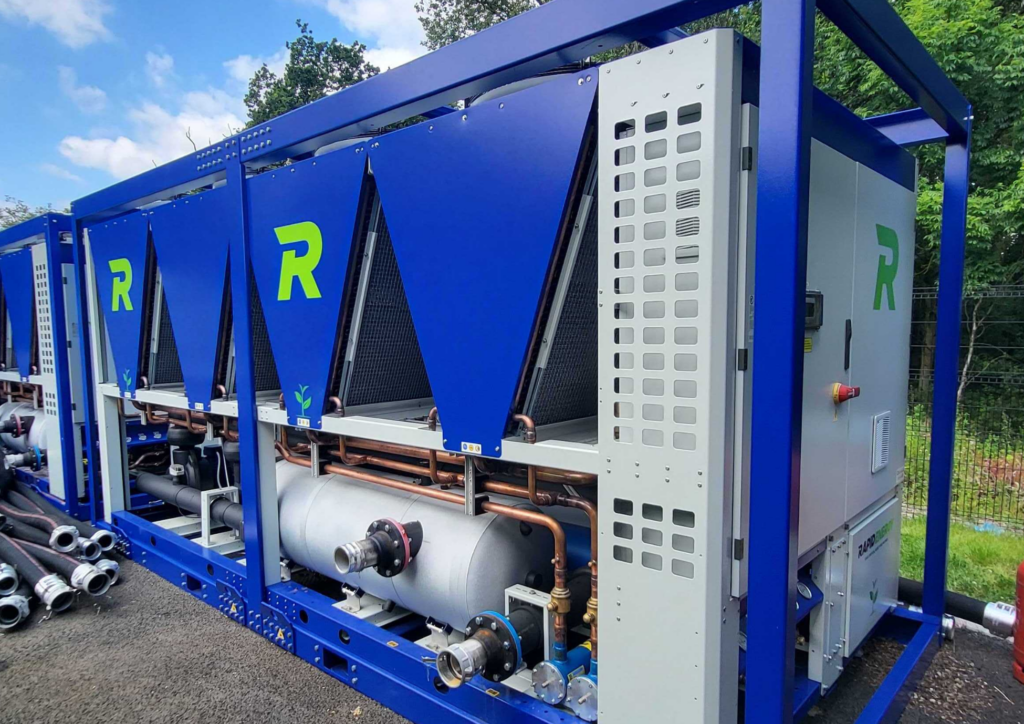
When specifying temporary cooling or heating equipment, maximum capacity is often the first figure considered. If a site has a peak cooling requirement of 600kW, for example, the obvious starting point is equipment capable of meeting that demand.
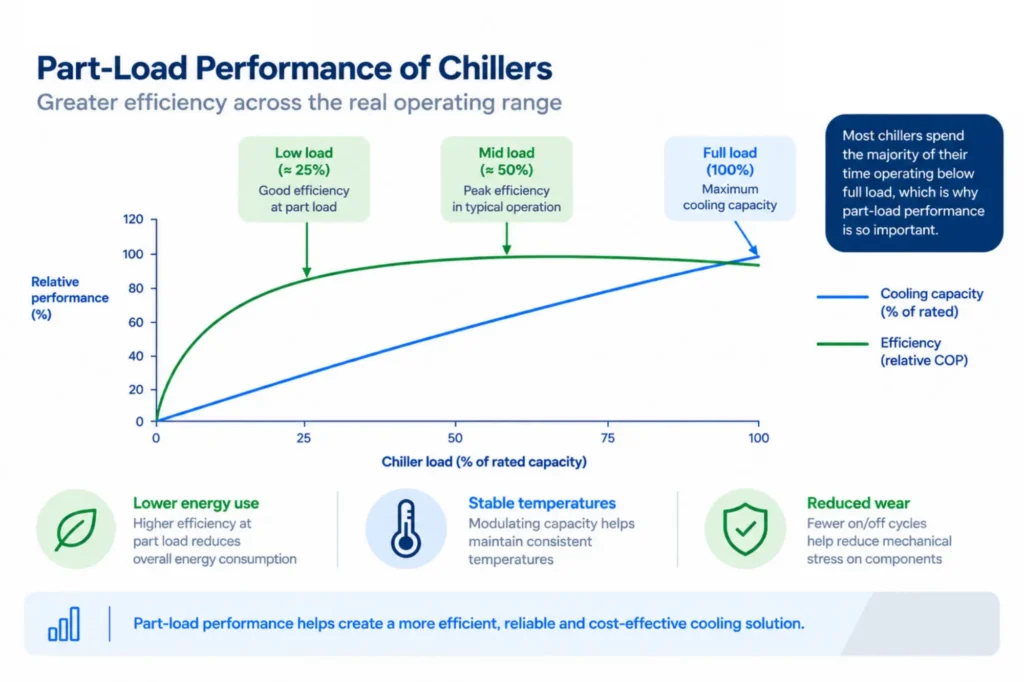
However, a chiller is unlikely to operate at 100% capacity all day.
Production levels change. Outside temperatures rise and fall. Building occupancy varies. Processes start and stop. As a result, the actual heating or cooling requirement can look very different from one hour to the next.
This is where part-load performance becomes important.
For temporary temperature control, the aim isn’t simply to install enough capacity for the highest possible demand. The system also needs to perform effectively throughout the changing conditions it will experience on site.
Share this graphic on your website by copying and pasting the embed code below:
<a href="https://rapidenergy.co.uk/wp-content/uploads/2026/08/Part-Load-Performance-of-Chillers.pdf">
  <img src="https://rapidenergy.co.uk/wp-content/uploads/2026/08/Part-Load-Performance-of-Chillers-1024x682.webp" alt="Part-Load Performance of Chillers Graph" style="max-width:100%;height:auto;">
</a>
What Does Part-Load Performance Mean for Chillers?
Part-load operation simply means a chiller or heat pump chiller is operating below its maximum rated capacity.
For example, a 300kW chiller might need to provide close to its full output during peak production. A few hours later, the site’s requirement could fall to 200kW or 150kW.
That variation is completely normal.
Part-load performance describes how effectively the equipment operates when full capacity isn’t required.
This is an important distinction because headline capacity only tells you what a chiller can deliver at a particular operating point. It doesn’t tell you how effectively that equipment will respond to the changing loads it may encounter throughout a hire.
Why Cooling Loads Change
Commercial and industrial cooling requirements are rarely static.
In a manufacturing environment, cooling demand might increase when production lines are operating at full capacity before reducing during a quieter shift. In a commercial building, the load can change according to occupancy and external conditions.
Common influences include:
- Changes in production or process demand
- Equipment starting and stopping
- Building occupancy and usage
- Outdoor temperature and solar gain
- Daily and seasonal operating conditions

A temporary chiller therefore needs to accommodate these variations while continuing to maintain the required flow temperature and process or building conditions.
Why Part-Load Efficiency Matters
When cooling demand falls, a chiller needs a way of reducing its output to match it. How effectively it can do this has an impact on the performance of the overall temporary cooling system.
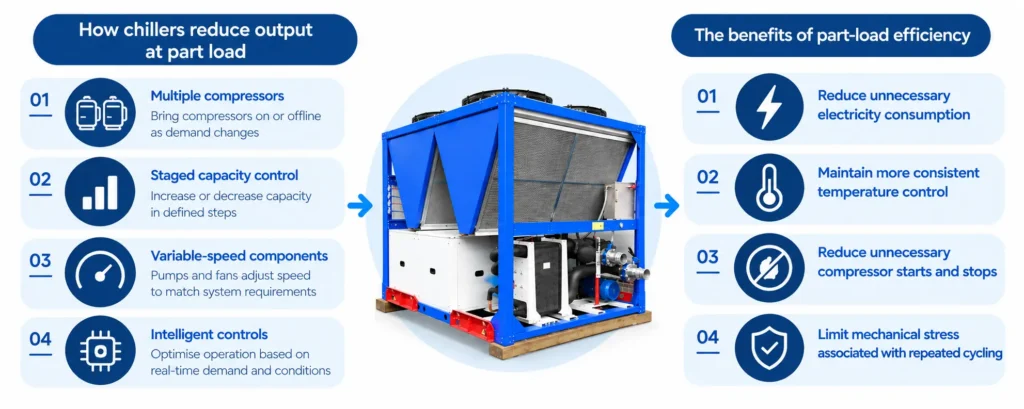
Depending on the equipment, this can be achieved through multiple compressors, staged capacity control, variable-speed components and intelligent controls.
Multiple-compressor chillers, for example, can bring compressors on or offline as demand changes rather than relying on the full available capacity at all times. Variable-speed pumps and fans can also adjust their operation according to system requirements.
Matching output more closely to the actual load can help:
- Reduce unnecessary electricity consumption
- Maintain more consistent temperature control
- Reduce unnecessary compressor starts and stops
- Limit mechanical stress associated with repeated cycling
- Create a temporary system better suited to changing site conditions
Part-load performance therefore isn’t simply a technical specification. It can directly influence how efficiently a temporary cooling system operates throughout the hire.
The Risks of Oversizing a Temporary Chiller
Providing some contingency can be important, particularly where temperature control is critical. However, significantly oversizing a temporary chiller isn’t necessarily the most effective approach.
If the site’s minimum load is considerably below the chiller’s available capacity, the unit may repeatedly satisfy the demand and shut down before restarting again shortly afterwards.
This is known as short-cycling.
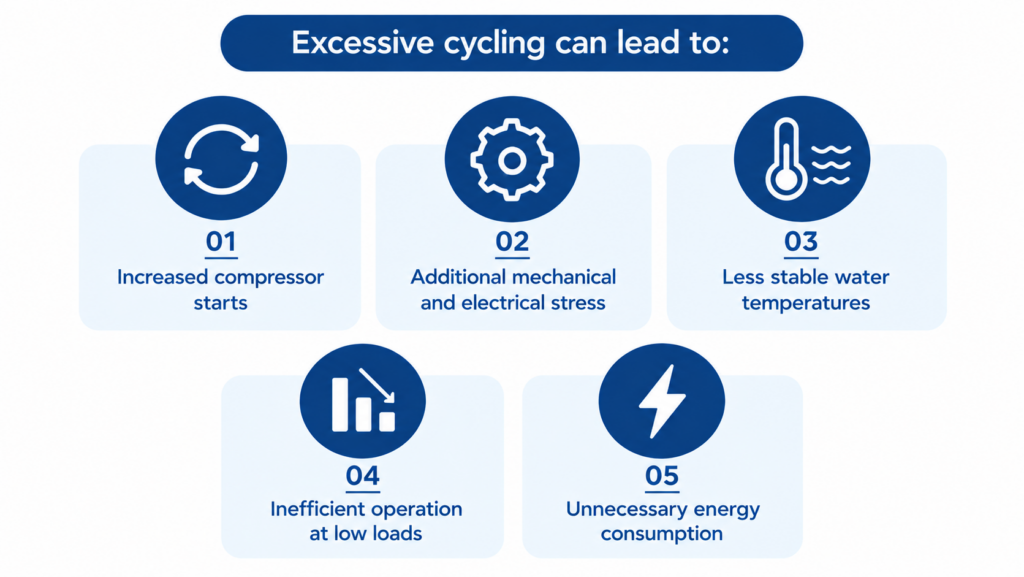
Excessive cycling can lead to:
- Increased compressor starts
- Additional mechanical and electrical stress
- Less stable water temperatures
- Inefficient operation at low loads
- Unnecessary energy consumption
Correct sizing is therefore about more than meeting the highest expected demand. The selected equipment should also be capable of operating effectively when the load drops.
Using Multiple Chillers for Variable Cooling Loads
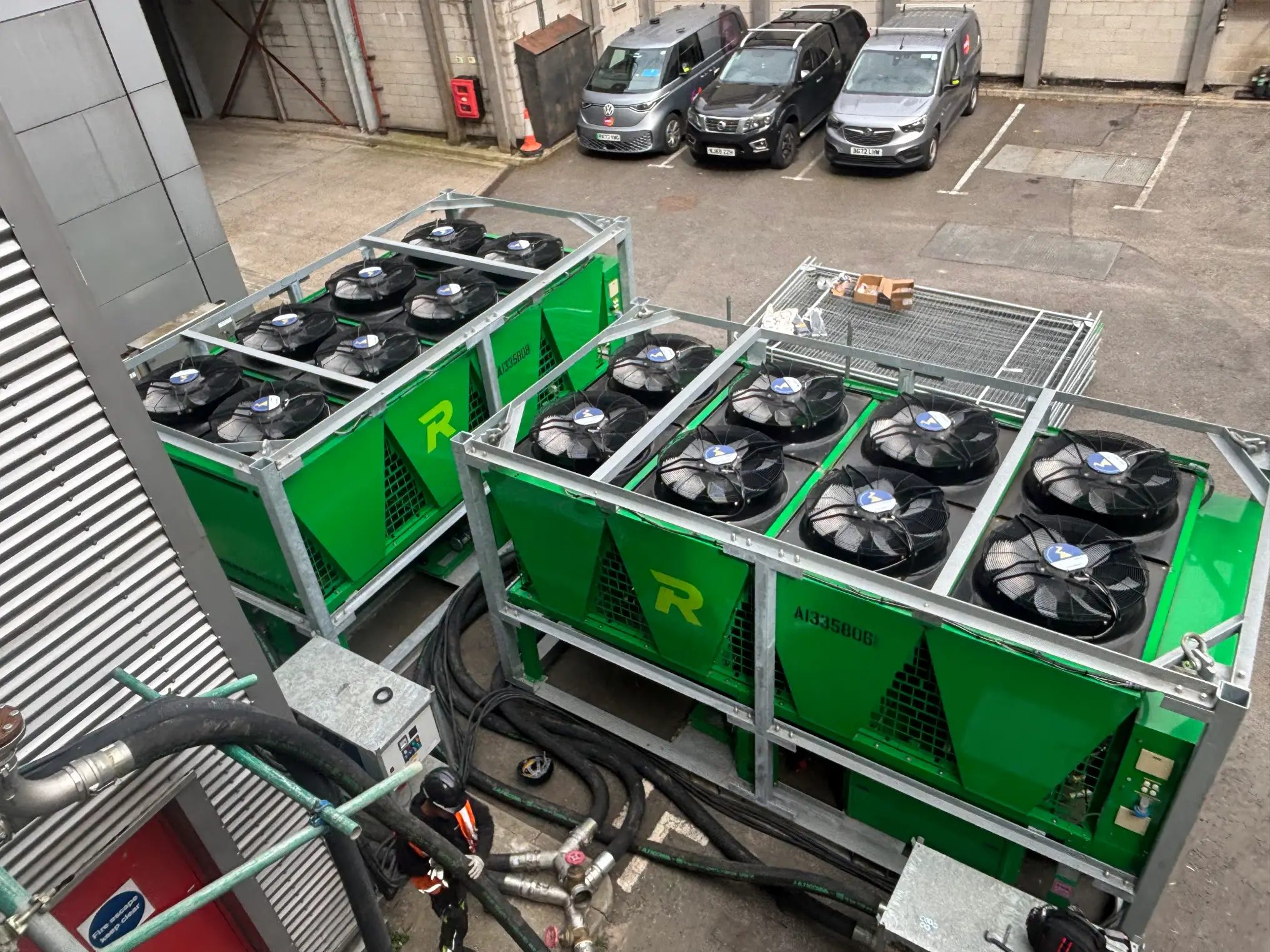
For larger applications or sites with highly variable loads, a modular arrangement using multiple temporary chillers may be more appropriate than relying on one larger unit.
The principle is straightforward: available cooling capacity can be staged as site demand changes.
During periods of high demand, additional chillers can operate. When the load reduces, capacity can be reduced accordingly.
A multi-chiller arrangement can provide:
- Greater flexibility across changing loads
- Staged cooling capacity
- Additional resilience where required
Whether this approach is suitable depends on the application, available power, flow requirements, site infrastructure and expected load profile.
Key Factors When Sizing a Temporary Chiller
Understanding the peak load is important, but it is only one part of temporary chiller selection.
Before specifying a system, several factors can influence both equipment choice and how the overall installation should be configured.
These include:
- Peak and minimum demand – the range the system needs to operate across.
- Flow and return temperatures – the temperatures required by the existing system or process.
- Flow rate – ensuring sufficient water circulation through the temporary system.
- System water volume – adequate water volume can help provide more stable operation and reduce excessive cycling.
- Available electrical supply – particularly important for larger chiller installations.
- Operating hours – including whether cooling or heating is required continuously.
- Ambient conditions – and how these may change throughout the hire.
- Existing infrastructure – including pumps, hoses, pipework and heat exchangers.
- Resilience requirements – including whether duty/standby or additional contingency is required.
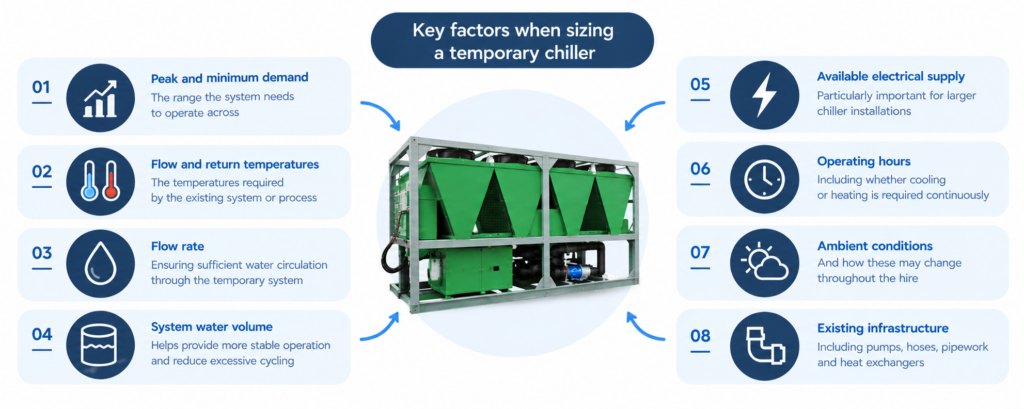
Looking at these factors together gives a much clearer picture of how a temporary chiller needs to perform once it is connected to the site.
Rapid Energy Temporary Chillers
At Rapid Energy, we provide temporary chillers across a broad capacity range, from compact 4kW packaged chillers through to 760kW units, alongside heat pump chillers from 30kW to 360kW.
This gives our engineers flexibility when selecting equipment around a site’s actual load profile.
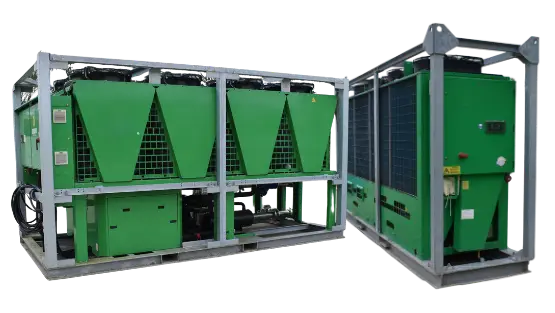
The chiller itself is only part of the installation. Depending on the project, we can engineer a temporary system incorporating:
- Pumps and water circulation equipment
- Temporary hoses and connections
- Heat exchangers
- Additional capacity for contingency
This allows the complete temporary system to be considered around the site’s required temperatures, flow rates, available power, operating pattern and expected changes in demand.
For an emergency chiller failure, that means working quickly to establish the requirement and restore temperature control.
For a planned shutdown chiller hire, it provides the opportunity to assess how demand is likely to change throughout the project and configure the temporary system accordingly.
Our focus is not simply on supplying enough kW to cover a peak figure. It is on providing a temporary temperature control system that is appropriately engineered for how the site needs to operate.
Speak to Rapid Energy about your temporary chiller or heat pump chiller requirements.
Frequently Asked Questions
What is part-load performance in a chiller?
Part-load performance refers to how effectively a chiller operates when the cooling demand is below its maximum rated capacity. As site loads often change throughout the day, chillers need to perform effectively across a range of operating conditions rather than only at full load.
Why is part-load performance important when hiring a chiller?
A temporary chiller may spend much of its hire operating below peak demand. Considering part-load performance can help ensure the system is appropriately sized for changing loads, supporting efficient operation, stable temperature control and reduced unnecessary compressor cycling.
Can an oversized chiller cause problems?
Yes. If a chiller is significantly oversized for the actual load, it may frequently start and stop as cooling demand is quickly satisfied. This short-cycling can affect efficiency, temperature stability and place additional stress on components.
Can multiple chillers be used for changing cooling loads?
Yes. For larger or highly variable requirements, multiple temporary chillers can be configured as a staged system. This allows available cooling capacity to be adjusted as demand changes and can also provide additional resilience where required.
How do you choose the right size temporary chiller?
Chiller sizing should consider more than peak cooling demand. Factors including minimum load, flow and return temperatures, flow rate, system water volume, available electrical supply, ambient conditions and operating hours can all influence the most appropriate solution.