0800 464 7025

When a site suddenly loses heating, or temporary heating is needed during maintenance, upgrades, or seasonal demand, choosing the right equipment is critical.
In most commercial and industrial environments, the decision usually comes down to two options: temporary boiler hire or heat pump chiller hire.
Both are highly effective temporary heating solutions, but they work differently and are designed for different types of systems and operational requirements.
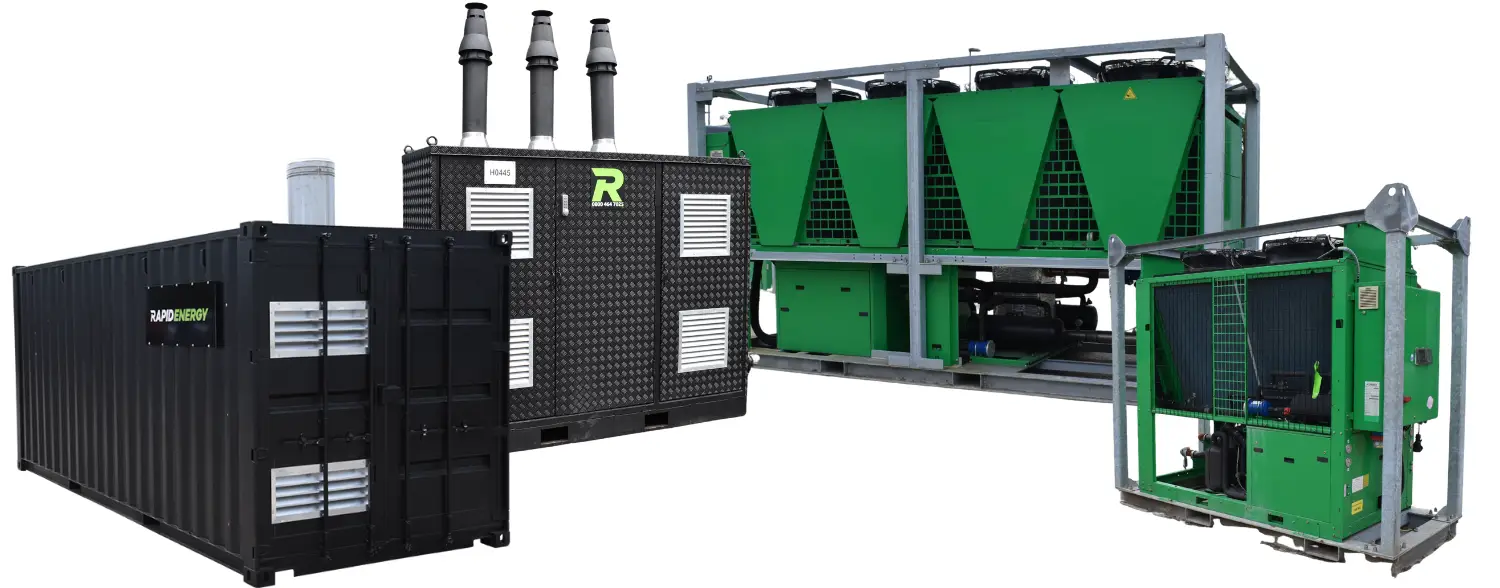
At Rapid Energy, we provide both boiler hire and heat pump chiller hire across the UK, supporting everything from hospitals and manufacturing plants to commercial buildings, data centres, and heat networks.
This guide breaks down the key differences between the two equipment types.

Share this graphic on your website by copying and pasting the embed code below:
<a href="https://rapidenergy.co.uk/wp-content/uploads/2026/05/Boilers-vs-Heat-Pump-Chillers.pdf" target="_blank">
  <img src="https://rapidenergy.co.uk/wp-content/uploads/2026/05/Boilers-vs-Heat-Pump-Chillers-Graphic-1.webp" alt="Boilers vs Heat Pump Chillers Guide" style="max-width:100%; height:auto;" />
</a>
<p style="font-size:12px;">Via: <a href="https://rapidenergy.co.uk/blog/temporary-heating-boiler-hire-vs-heat-pump-chiller-hire/" target="_blank">Rapid Energy</a></p>
The Differences Between Boilers and Heat Pump Chillers
1. How They Produce Heat
Temporary Boilers
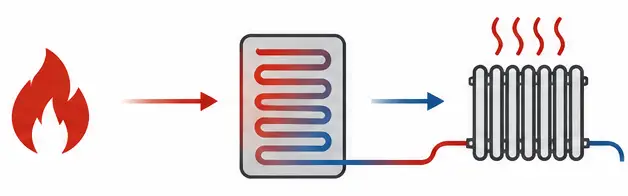
A temporary boiler generates heat directly using gas or oil combustion.
The system heats water and circulates it through the building or process system to provide heating or hot water.
Because boilers generate heat directly, they are commonly used in systems requiring higher water temperatures and fast heat delivery.
Temporary Heat Pump Chillers
A heat pump chiller works differently.
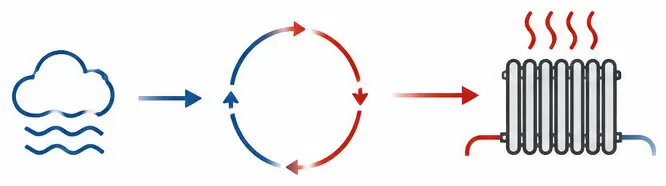
Instead of generating heat directly, it transfers heat using a reversible refrigeration cycle.
In heating mode, the unit absorbs heat energy from the outside air and transfers it into the water system.
Unlike a standard chiller, a heat pump chiller can also reverse the process to provide cooling when needed.
2. Water Temperature Requirements
One of the biggest differences between the two systems is the water temperature they are typically designed to deliver.
Temporary Boilers
Many traditional heating systems operate at temperatures such as:
- 80/60°C
- 75/65°C
- 70/50°C
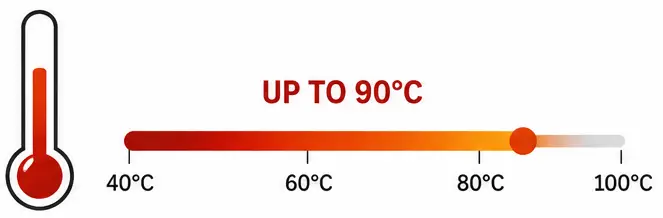
Across our boiler hire fleet, units can operate with supply temperatures up to 90°C, from our 300kW packaged boiler through to our 2MW packaged boiler.
Temporary Heat Pump Chillers
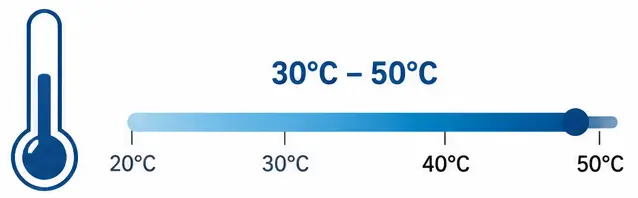
Heat pump chillers generally operate at lower flow temperatures, typically between 30°C and 50°C depending on the application and system design.
Across our heat pump chiller hire fleet, units deliver heating up to 50°C LWT, from our 30kW Heat Pump Chiller through to our 360kW Heat Pump Chiller.
3. Heating Demand and Heat Recovery
The type of heating demand on site also influences which solution is most suitable.
Temporary Boilers
Temporary boilers are commonly used where sites require:
- Higher water temperatures
- Fast heat-up times
- Large variable heating loads
- Traditional heating infrastructure
- Process or production heating
- Heating-only applications
Because boilers generate heat directly, they are commonly used in applications requiring high-temperature heating and rapid system recovery following outages or shutdowns.
Temporary Heat Pump Chillers
Heat pump chillers are often used where sites require:
- Lower temperature heating
- Heating and cooling from one system
- Stable temperature control
- Modern HVAC infrastructure
- Energy-efficient operation
They are particularly common in commercial buildings, data centres, and modern HVAC environments designed around flexible temperature control.
4. Outdoor Temperature and Seasonal Operation
Both systems are designed for year-round operation, but they respond differently to outdoor conditions.
Temporary Boilers
Because boilers generate heat through combustion, they can maintain high water temperatures consistently regardless of external ambient conditions.
This makes them particularly well-suited to applications requiring reliable high-temperature output during colder weather.
Temporary Heat Pump Chillers
Heat pump chillers transfer heat from the surrounding air, so outdoor temperatures can influence system efficiency and output.
Modern systems are designed to operate effectively even in low ambient conditions.
Our heat pump chillers, for example, can operate in temperatures as low as -15°C.
This allows them to provide dependable temporary heating across a wide range of seasonal conditions.
5. Heating Only vs Heating and Cooling
Another major difference is the type of temperature control each system provides.
Temporary Boilers
Temporary boilers are designed specifically for heating and hot water applications, making them ideal for sites requiring dedicated temporary heat supply.

Temporary Heat Pump Chillers
Heat pump chillers can provide both heating and cooling from the same unit, offering greater flexibility for sites with changing seasonal or operational temperature demands.

6. Efficiency and System Operation
Another key difference between boilers and heat pump chillers is how they use energy to provide heating.
Temporary Boilers
Temporary boilers generate heat directly through combustion, using fuel to produce thermal energy for the heating system.
This makes them highly effective for delivering consistent high-temperature heating, particularly in systems designed around traditional boiler operation.
Temporary Heat Pump Chillers
In heating mode, heat pump chillers absorb heat from the surrounding air and transfer it into the water circuit. Because the unit is moving heat rather than creating it, heat pump chillers can achieve lower energy consumption in certain applications.
This can make them an attractive option for sites focused on energy efficiency or reducing fuel usage.
Which Temporary Heating Solution Is Right for Your Site?
Neither system is universally “better” than the other, they are simply designed for different operating conditions and site requirements.
In some applications, sites may also use a hybrid setup combining both technologies.
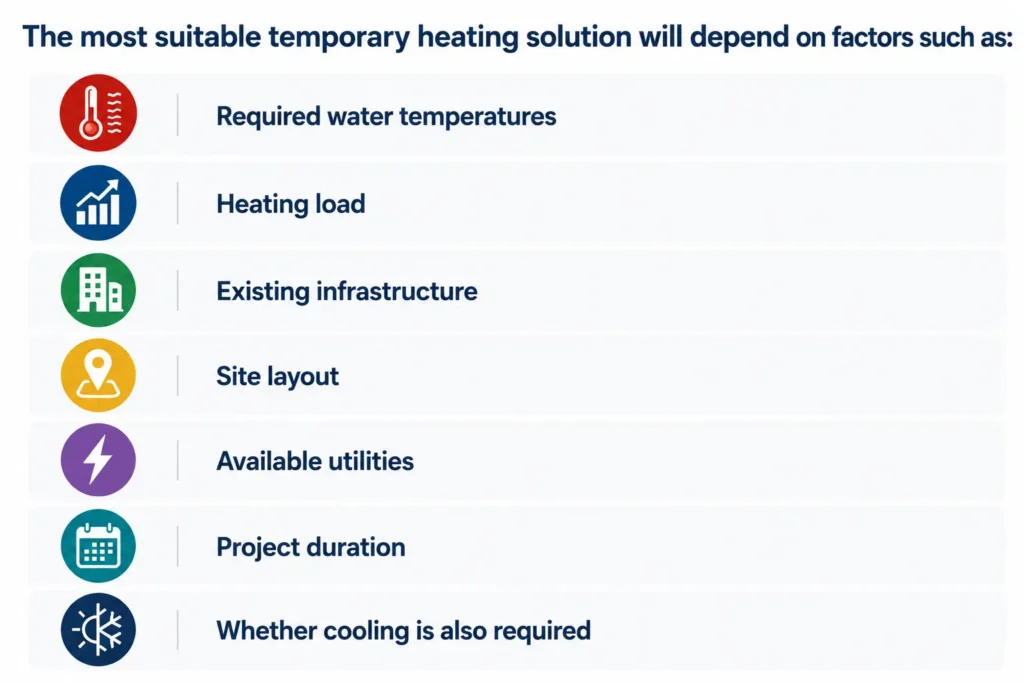
That’s why proper site assessment is important.
At Rapid Energy, we provide engineered temporary heating and cooling solutions tailored to the specific demands of each site, whether that involves boiler hire, heat pump chiller hire, or a combined approach.
FAQs
What is the main difference between a boiler and a heat pump chiller?
A boiler generates heat directly through combustion, while a heat pump chiller transfers heat using refrigeration technology and can also provide cooling.
Can heat pump chillers provide heating in winter?
Yes. Modern heat pump chillers are designed to operate effectively in low ambient temperatures, including sub-zero conditions.
Do heat pump chillers replace boilers?
Not necessarily. Both technologies are widely used for temporary heating, with the best option depending on the heating system, required temperatures, and site requirements.
Can a heat pump chiller provide both heating and cooling?
Yes. Unlike boilers, heat pump chillers can switch between heating and cooling modes depending on site demand.
Are temporary boilers still widely used?
Yes. Temporary boiler hire remains a common solution for high-temperature heating and hot water systems during emergencies or planned maintenance.
Can Rapid Energy help decide which system is suitable?
Yes. Our team can assess your site requirements and recommend the most suitable temporary heating or cooling solution based on your system, temperatures, and operational needs.