0800 464 7025


We specialise in delivering dependable, expertly engineered temperature control hire solutions for commercial and industrial environments. From emergency heating during a boiler failure to additional cooling during a summer peak, our work ensures that businesses never compromise on productivity, safety, or reputation.
Behind this expertise is the HVAC engineer – the professional who designs, installs, maintains, and troubleshoots heating, ventilation, and air conditioning systems. Sometimes referred to as an air conditioning engineer, ventilation engineer, or heating engineer, this role is critical across industries such as:
- Healthcare (where strict climate control is essential)
- Manufacturing (where quality depends on precise conditions)
- Construction and government (large-scale infrastructure projects)
- Heat networks and energy systems (supporting sustainable infrastructure)
But what does the career path actually look like, and is HVAC engineering worth pursuing?
The Path to Becoming an HVAC Engineer
There are several routes into the profession, depending on your goals:
- Apprenticeships – practical training in building services, refrigeration, or mechanical systems.
- College qualifications – NVQs, City & Guilds, or BTECs in HVAC or related areas.
- University degrees – mechanical or building services engineering (especially for HVAC design engineering roles).
- Industry certifications – such as F-Gas for those working with air conditioning systems.
It typically takes 3-5 years to become fully qualified, whether through a trade route, a degree, or a combination of both.

What the Job Involves
HVAC is a career that offers both variety and challenge. Depending on the role, you might be:
- Installing and commissioning new systems.
- Servicing and repairing heating, ventilation, or air conditioning equipment.
- Designing energy-efficient systems for large commercial sites.
- Troubleshooting emergencies when a failure threatens operational continuity.
Some days may be physically demanding, requiring work in confined spaces or at heights. Other roles, such as HVAC design engineering, are office-based and more analytical. The choice of pathway makes HVAC a flexible career to grow into.
Why Choose HVAC as a Career?
For those wondering whether HVAC engineering is a good career, there are several clear benefits:
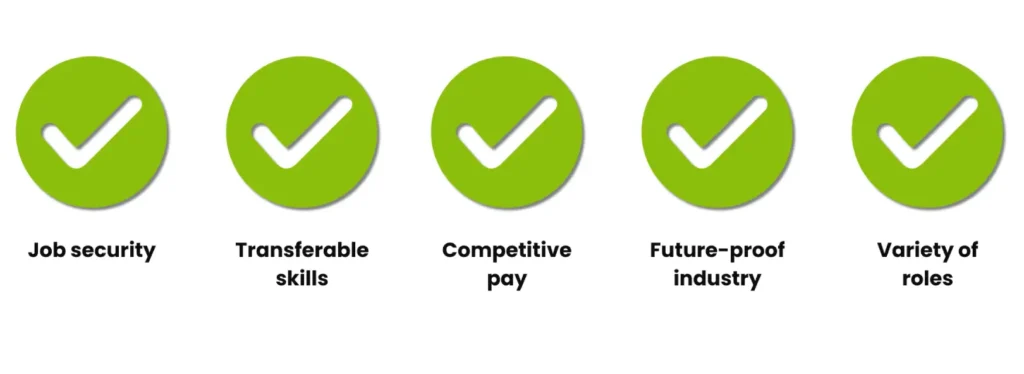
- Job security – demand is consistently high across industries.
- Transferable skills – HVAC knowledge is relevant worldwide.
- Competitive pay – experienced engineers, especially in design, can earn strong salaries.
- Future-proof industry – sustainability and energy efficiency are driving growth.
- Variety of roles – from hands-on fieldwork to technical design and project management.
In short, HVAC is not only a career with stability, but also one that will remain critical as the world transitions to greener, more efficient systems.
Work-Life Balance and Challenges
Like any engineering career, HVAC has its pressures. Emergency callouts can be stressful, but they also showcase the importance of the work. For many engineers, the sense of responsibility and impact makes the challenges worthwhile.
Key points to consider:
- Stress levels – may be higher during urgent breakdowns, lower in planned maintenance roles.
- Physical demands – installation and repair can be tough on the body, while design roles are less so.
- Work-life balance – generally good, though some flexibility is needed for emergency work.
Skills That Make a Great HVAC Engineer
Success in HVAC requires both technical expertise and personal attributes. The most effective engineers tend to have:
- Strong problem-solving skills – essential in emergencies.
- A solid grounding in maths and physics – for system calculations.
- Excellent communication – for liaising with clients and contractors.
- A commitment to ongoing training – especially as sustainability standards evolve.
- Adaptability – every system and site presents a new challenge.
The Future of HVAC
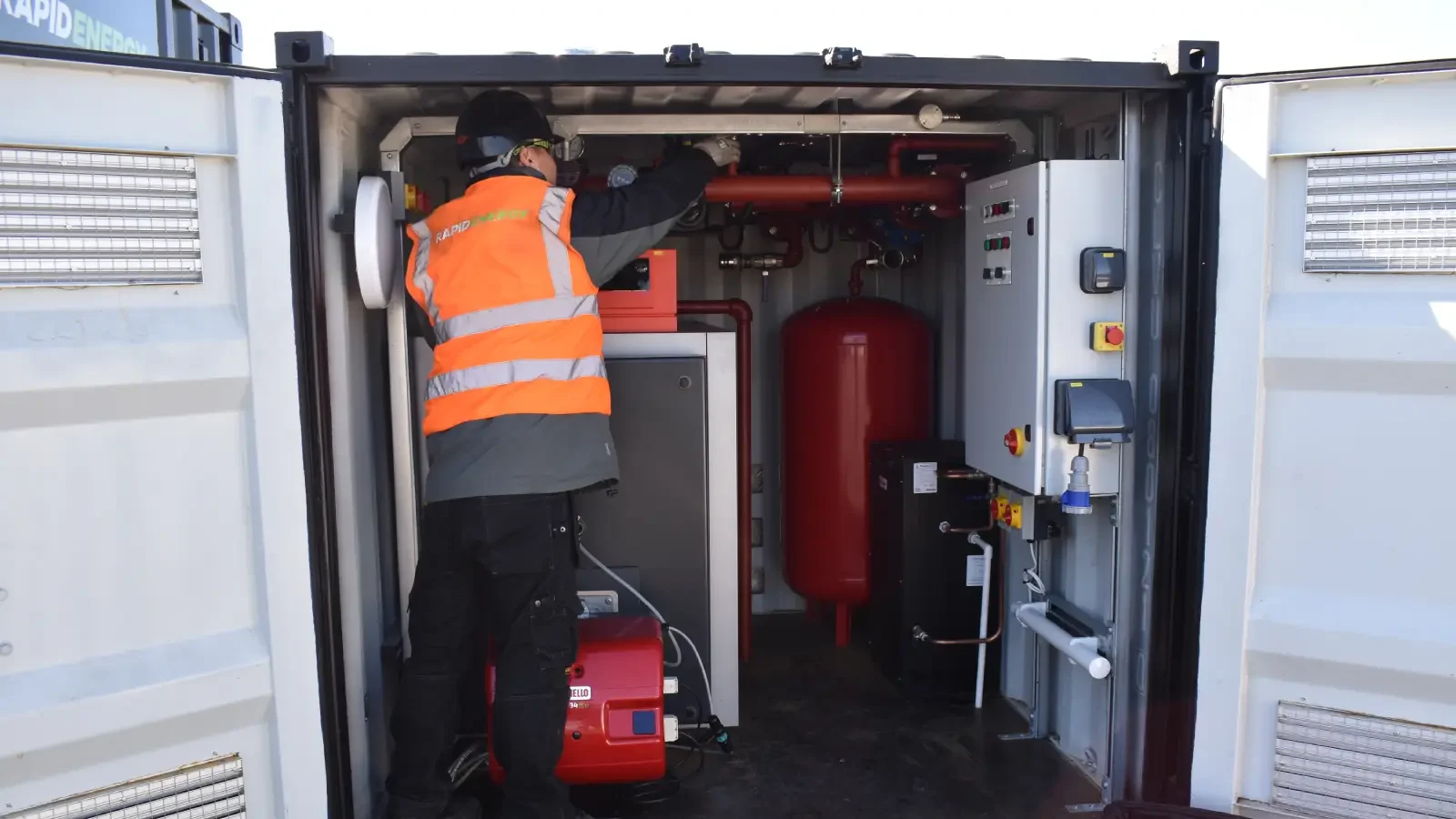
With the global shift towards carbon reduction, renewable heating, and sustainable cooling, HVAC engineers are at the forefront of designing and maintaining systems that reduce environmental impact. Technologies such as heat pumps and energy-efficient ventilation are becoming mainstream, meaning HVAC isn’t just a stable trade – it’s a career driving real change.
The Next Step in Your HVAC Career Journey
Becoming an HVAC engineer is about more than working with heating and cooling systems. It’s about ensuring safety, productivity, and operational continuity in industries that can’t afford downtime. Whether you pursue a path as an air conditioning engineer, ventilation engineer, or specialist in HVAC design engineering, you’ll be stepping into a role with stability, variety, and purpose.
If this sounds like a career path you’d like to explore, why not take the first step?
See what engineering roles we currently have available at Rapid Energy Careers.
FAQs
1. What tools does an HVAC engineer use?
HVAC engineers rely on a mix of diagnostic equipment, gauges, multimeters, refrigerant recovery machines, and design software for planning systems.
2. Do HVAC engineers work indoors or outdoors?
Both. Some work is indoors in plant rooms, offices, or hospitals, while other tasks involve outdoor units, rooftops, or construction sites.
3. Can HVAC engineers specialise in renewable energy?
Yes. Many engineers now focus on low-carbon systems such as heat pumps, district heating, and energy-efficient ventilation solutions.
4. Is travel common in HVAC engineering?
Often, yes. Engineers frequently visit different sites, especially in commercial and industrial projects. Some roles even involve national or international travel.
5. Are there part-time or flexible HVAC engineering jobs?
While most roles are full-time, some employers offer flexible schedules or on-call arrangements, particularly in maintenance and service contracts.
6. What industries hire HVAC engineers the most?
Key industries include construction, manufacturing, healthcare, government facilities, and data centres – all of which rely on stable temperature control.
7. What’s the difference between an HVAC engineer and an HVAC technician?
A technician usually focuses on installation and repair, while an engineer may handle system design, efficiency calculations, and larger project management.
8. Do HVAC engineers need computer skills?
Yes. Modern HVAC design relies on CAD software, energy modelling, and building management systems, making IT skills increasingly important.
9. Can women become HVAC engineers?
Absolutely. Although the field has traditionally been male-dominated, more women are entering HVAC through apprenticeships, degrees, and design roles.
10. What’s the career progression for an HVAC engineer?
With experience, engineers can move into roles such as project manager, design consultant, energy efficiency specialist, or even start their own business.