0800 464 7025


For manufacturers, summer doesn’t just bring warmer weather.
It brings higher ambient temperatures, increased cooling loads, and additional pressure on production equipment that may already be operating close to capacity.
While many industrial sites focus heavily on maintaining production throughput, cooling systems often receive attention only when something goes wrong. The reality is that chillers play a critical role in everything from process cooling and machinery performance to product quality and worker safety.
That’s why more manufacturing and industrial businesses are turning to temporary chiller hire as part of their summer contingency planning.
The Hidden Impact of Summer Temperatures on Industrial Operations
Many production environments rely on cooling systems that were designed around average operating conditions, not peak summer temperatures.
As outside temperatures increase, chillers have to work harder to reject heat. This can reduce overall system efficiency and place additional strain on ageing equipment.
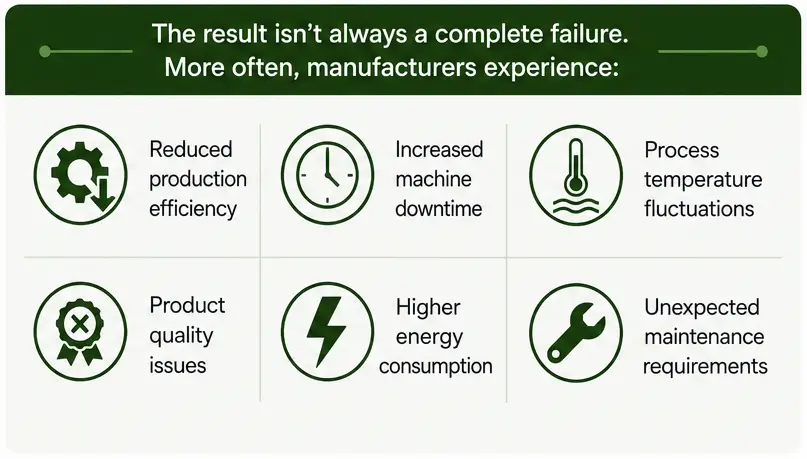
In sectors such as food production, plastics manufacturing, pharmaceuticals, chemical processing, engineering, and packaging, even minor temperature deviations can affect output quality and profitability.
A process running just a few degrees outside its optimal range can result in increased waste, rejected products, or slower production speeds.
Why Chiller Failures Cost More Than Most Businesses Expect
When an industrial cooling system fails, the cost isn’t usually the repair bill.
It’s the production downtime.
Every hour of lost manufacturing output can create a chain reaction across operations, affecting production targets, customer commitments, staffing, logistics, and revenue.
Many businesses only calculate the direct cost of a repair. Few account for:
- Lost production capacity
- Delayed customer deliveries
- Product spoilage
- Additional labour costs
- Emergency engineering support
- Reputational damage
This is why temporary cooling isn’t simply a maintenance solution, it’s often a business continuity solution.
How Temporary Chillers Support Manufacturing Operations

1. Emergency Cooling During Equipment Failure
The most obvious use case is unexpected breakdowns.
When a chiller fails during peak summer demand, temporary cooling can keep production running while repairs or replacements are arranged.
Without a contingency plan, businesses often face difficult decisions between reduced output and complete shutdown.
2. Supporting Planned Maintenance
Many manufacturers schedule maintenance during quieter periods, but cooling systems still need servicing and inspection.
Temporary chillers allow maintenance teams to carry out planned works without disrupting production schedules.
3. Managing Seasonal Production Peaks
Some industrial processes generate significantly more heat during peak production periods.
Rather than investing in permanent cooling infrastructure that may only be needed for a few months each year, temporary chiller rental provides additional capacity when demand increases.
4. Covering Plant Expansions and New Production Lines
Production growth often happens faster than infrastructure upgrades.
Temporary cooling can bridge the gap while permanent systems are designed, installed, and commissioned.
The Most Common Mistake Manufacturers Make
One of the biggest mistakes manufacturers make is waiting until a cooling system fails before exploring temporary chiller hire options.
The businesses that minimise downtime typically have a cooling contingency plan already in place.
At Rapid Energy, we can work with your team in advance to understand your site’s requirements, allowing us to respond faster if cooling support is ever needed.
This may include:
- Cooling capacity requirements
- Site access arrangements
- Available power supply
- Connection points
- Operational priorities

By having these details on file, we can mobilise the most suitable temporary chiller solution quickly, helping to reduce disruption and keep production moving.
Choosing the Right Temporary Chiller
Industrial cooling requirements are rarely straightforward, which is why selecting the right equipment is about more than simply choosing a chiller with the highest output.
At Rapid Energy, we offer a broad range of temporary cooling solutions to suit different manufacturing and industrial applications, including:
- Packaged chiller hire from 4kW to 760kW
- Heat pump chillers from 30kW to 360kW
- DX units from 20kW to 100kW
Whether you need temporary cooling for a single production area or an entire facility, our team can recommend and deploy a solution that matches your operational requirements.

How Rapid Energy Supports Industrial Operations
At Rapid Energy, we provide fast, dependable temperature control hire solutions for manufacturers and industrial facilities across the UK.
Whether you’re responding to an unexpected cooling failure, increasing capacity during peak production periods, or maintaining operations during planned maintenance, our team can deliver a tailored temporary cooling solution designed around your site’s requirements.
Because in manufacturing, temperature control isn’t just about comfort.
It’s about keeping production moving.
FAQs
What industries commonly hire temporary chillers?
Temporary chillers are widely used across manufacturing, food and beverage production, pharmaceuticals, plastics processing, engineering, chemical processing, construction, and energy sectors.
Can temporary chillers support process cooling applications?
Yes. Temporary chillers are regularly used to maintain process cooling requirements for machinery, production lines, manufacturing equipment, and industrial processes.
How quickly can a temporary chiller be deployed?
At Rapid Energy, our cooling solutions can often be delivered and commissioned the same day.
Is temporary chiller hire only for emergencies?
No. Many businesses use temporary chillers for planned maintenance, seasonal demand, factory expansions, equipment upgrades, and contingency planning.
How do I know what cooling capacity I need?
The correct solution depends on your process requirements, heat loads, operating temperatures, and site conditions. A site assessment will help determine the most suitable temporary cooling solution.